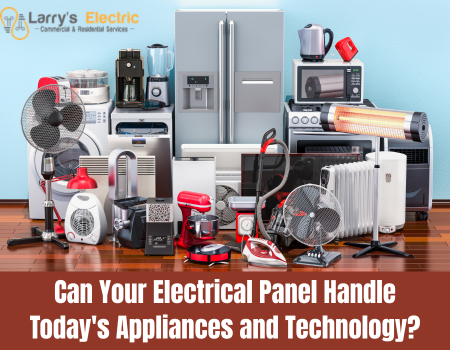
The electrical panel in most Seattle homes wasn’t designed with today’s appliances in mind. It was designed for the household that existed when the house was built — a household with a fraction of the electrical demand that a modern home creates before anyone plugs in the devices that have become standard in the last ten years. The electrical panel that handled that household adequately is now being asked to handle something fundamentally different, and the question of whether it can isn’t answered by whether the lights are currently on.
What the Electrical Panel Was Built For
An electrical panel’s capacity is measured in amps, and the service level that was standard at different points in Seattle’s residential construction history reflects the electrical demand that was normal at the time rather than what would prove adequate for the decades that followed. A 60-amp service electrical panel, standard in many homes built before 1960, was designed for a household where the major electrical loads were lighting, a refrigerator, and a few small appliances. A 100-amp panel, standard through much of the 1970s and 1980s, handled the expanded electrical demand of that era adequately and provides limited headroom for the additions that modern households make without thinking about whether the panel can absorb them.
The gap between what these panels were designed for and what a current household asks of them isn’t subtle. A single modern heat pump can draw 40 to 50 amps under load. An EV charger at Level 2 requires a dedicated 50-amp circuit. An induction range runs on a 50-amp circuit. A home office with a desktop computer, multiple monitors, a laser printer, and task lighting adds a load that a 1970s household would have found incomprehensible. The panel that was correctly sized for 1975 is being asked in 2025 to handle a load that 1975 couldn’t have anticipated.
The Signs That the Electrical Panel Is Struggling
The panel that’s operating at or near its capacity communicates this in specific ways that are easy to dismiss as minor inconveniences rather than recognizing them as infrastructure signals. Lights that dim when the refrigerator cycles on or the HVAC starts up are showing the voltage drop that occurs when a large load draws current from a panel that doesn’t have adequate headroom to absorb the surge. The dimming isn’t a lighting problem. It’s a capacity problem expressed through the lights.
Breakers that trip more frequently than they used to are doing their job — preventing the circuit from carrying more current than the wiring is rated for — but the frequency of tripping communicates that the circuit is regularly being asked to handle loads that approach its limit. A breaker that trips occasionally in a specific circumstance is a breaker doing what breakers do. A breaker that trips regularly, or that trips when nothing unusual is happening, is a panel telling you that the circuit’s load regularly exceeds what it was designed for.
Running out of space in the panel for additional circuits is the capacity signal that’s most concrete and least deniable. A panel whose breaker slots are full has no room for the dedicated circuit the EV charger requires, no room for the home office circuit that would stop tripping the breaker in the second bedroom, and no room for the circuit the kitchen renovation will need. The panel that has no room isn’t just inconvenient. It’s the infrastructure ceiling that prevents the household from functioning the way the household wants to function.
Specific Technology and Appliance Concerns for Older Electrical Panels
Electric vehicle charging is the addition that exposes panel capacity limits most reliably in Seattle homes right now. Level 1 charging — a standard 120-volt outlet — adds roughly 40 miles of range overnight, which works for some driving patterns and doesn’t for most. Level 2 charging requires a dedicated 240-volt, 50-amp circuit that a panel at capacity or a panel without available slots simply can’t accommodate without an upgrade. The EV purchase decision and the panel capacity conversation belong in the same timeline rather than discovering the electrical limitation after the car is in the driveway.
Heat pumps are Seattle’s other major current load addition as households move away from gas heating. A heat pump’s electrical demand varies by size and type, but 40 amps is a reasonable working number for a residential installation, and a 100-amp panel that’s already running a significant load doesn’t have 40 amps available for a heat pump without a service upgrade. The households pursuing heat pump installation as part of electrification are frequently discovering that the panel upgrade is the first step rather than an incidental one.
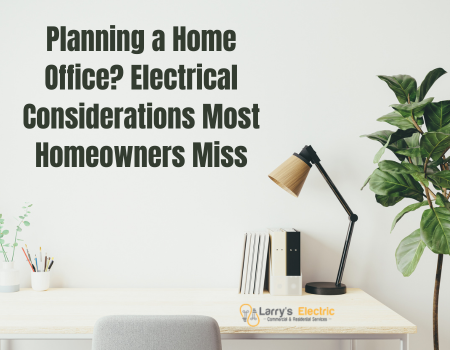
Home offices have transformed from a spare room with a computer to a dedicated workspace with a load that includes a desktop or laptop, external monitors, a docking station, a laser printer, task lighting, phone charging, and whatever else the job requires. This load isn’t the same as a bedroom’s load, and it frequently shares a circuit with other rooms in homes that were wired before home offices were a normal feature of residential life. The circuit trips because it was sized for a bedroom, not because the office is asking for anything unreasonable.
What an Electrical Panel Upgrade Actually Provides
A 200-amp service upgrade is the standard recommendation for most Seattle homes because 200 amps provides the capacity for a modern household’s current load plus the headroom for the additions that electrification is pushing into residential use. The upgrade isn’t just more capacity — it’s the infrastructure foundation that makes EV charging, heat pumps, and the electrical additions of the next decade possible without a subsequent upgrade conversation for each one.
The permit and inspection process that Seattle City Light requires for service upgrades ensures the work meets current code and that the new service is configured correctly for the household’s actual load. It adds time to the project timeline, and it produces a verified installation rather than one that was done correctly but not confirmed.
Seattle City Light’s home electrification resources cover the electrical requirements for EV charging installation, heat pump connections, and other electrification additions, which the service upgrade process involves for Seattle homeowners working with the utility, and what incentive programs are available for qualifying electrical upgrades — locally specific utility context that connects the panel capacity conversation to the electrification decisions Seattle homeowners are actively making.