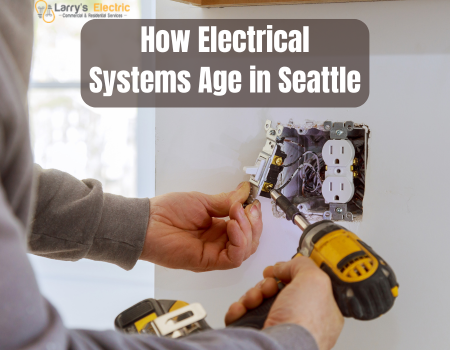
Seattle’s older neighborhoods contain some of the most architecturally distinctive housing stock in the Pacific Northwest and some of the most electrically complex. Craftsman bungalows in Wallingford, foursquares in Capitol Hill, Victorians in Queen Anne — these homes were built in eras when electrical demand was a fraction of what a modern household requires and when the materials, methods, and safety standards that governed the work looked nothing like what current code requires. The homes have aged gracefully in most visible respects. The electrical systems inside them have aged differently.
Understanding how electrical systems age in Seattle’s specific housing stock is useful for anyone buying, owning, or renovating in the city’s established neighborhoods.
Understanding Your Electrical System
The Wiring Generations
Seattle homes built before roughly 1950 were typically wired with knob and tube — the original residential wiring system that ran uninsulated conductors through ceramic knobs and tubes in the framing. Knob and tube isn’t automatically dangerous when it’s intact and not being asked to handle loads beyond its original design, but it’s ungrounded, it can’t be safely covered with insulation without creating heat buildup, and it was sized for an electrical load that a single modern appliance can exceed. The homes in Fremont, Phinney Ridge, and the Central District that still have active knob and tube are homes where the electrical system is operating in a fundamentally different context than the one it was designed for.
Aluminum branch circuit wiring is the electrical time capsule from the late 1960s and early 1970s that shows up in Seattle homes from that era. Federal guidance during that period promoted aluminum for residential branch circuits as a less expensive alternative to copper. The problem that emerged over time is that aluminum expands and contracts differently than copper at connection points — at outlets, switches, and panel connections — and that differential movement loosens connections that generate heat. Seattle homes built between roughly 1965 and 1973 have a meaningful probability of having aluminum branch circuit wiring, and aluminum that hasn’t been updated with compatible devices or proper connections is a fire risk that doesn’t announce itself visibly.
The panel generations follow a similar pattern. Federal Pacific Stab-Lok panels, installed in large numbers through the 1960s and 1970s, have documented breaker failure rates that make them a replacement recommendation rather than a monitor and maintain situation. Zinsco panels from the same era have similar documented issues. Both look like normal electrical panels, and both have failure modes that aren’t visible during routine inspection but that represent real safety risks in a wood-frame house in a city with Seattle’s rainfall, creating the moisture conditions that exacerbate electrical problems.
What Seattle’s Climate Does to Older Wiring
The Pacific Northwest’s moisture environment creates electrical aging conditions that aren’t as significant in drier climates. Wiring in crawl spaces under Seattle homes operates in conditions that range from damp to wet, depending on the drainage situation, the vapor barrier condition, and whether the crawl space has been properly sealed. Insulation on older wiring that’s been in a damp crawl space for fifty years has experienced moisture exposure that accelerates insulation degradation in ways that wiring in a dry climate doesn’t experience at the same rate.
Junction boxes in older Seattle homes, the electrical boxes where wiring connections are made, accumulate moisture conditions that corrode connections over decades. A corroded connection creates resistance at the connection point. Resistance creates heat. Heat in a junction box in a wood-frame wall is a slow electrical problem that doesn’t produce an obvious symptom until it produces a more serious one. The junction boxes in an older Seattle home that haven’t been opened and inspected since they were installed contain a history of the home’s moisture exposure that’s visible to an electrician who looks and invisible to everyone else.
The Load Problem
The wiring that served a Capitol Hill foursquare in 1925 was sized for a load that included overhead lighting, a radio, and perhaps an electric iron. The same wiring is now being asked to support heat pumps, EV chargers, induction ranges, home offices, and the accumulated electrical demand of a modern household. Not all of it; most older homes have had some electrical updating through the decades, but the original wiring that remains is being asked to coexist with modern loads on circuits that weren’t designed for them.
The panel that was standard at the time of original construction is often the first limit reached when the household tries to add modern loads. A 60-amp or 100-amp service panel in a Ballard craftsman that wants to add a heat pump and an EV charger is a panel that can’t accommodate those additions without a service upgrade. The additions that Seattle homeowners are making to reduce their carbon footprint and their utility bills are exactly the additions that the electrical infrastructure in older homes was never designed for.
What Aging Actually Looks Like in Your Electrical System
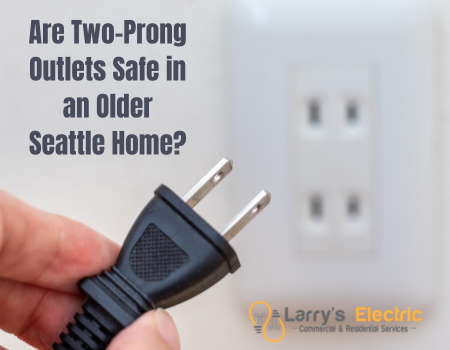
The electrical aging in Seattle’s older homes isn’t usually dramatic. Lights that dim when large appliances start. Outlets that don’t have ground slots. Breakers that trip more than they used to. A panel that’s running out of space for additional circuits. Wiring in the crawl space that’s showing signs of moisture exposure. None of these are emergencies in isolation.
The homes that sail through the electrical portion of inspections in Seattle’s older neighborhoods aren’t the oldest ones or the newest ones. They’re the ones where someone has been paying attention to the electrical system through the decades, updating the panel, replacing problem wiring, adding circuits as the load grew, rather than treating the electrical system as the part of the house that doesn’t need attention until something stops working.
The Washington State Department of Labor and Industries outlines the electrical safety standards and licensing requirements that apply to residential wiring in Seattle, what current code requires for older wiring systems, and when aging electrical systems in Washington homes require licensed assessment and update — authoritative state context for Seattle homeowners trying to understand what the electrical aging picture in their specific home means and what it requires.