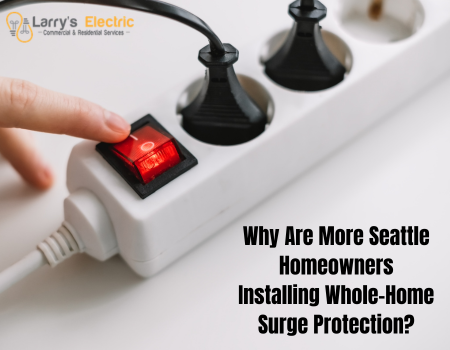
A power surge that trips a breaker or visibly damages an appliance is the version most people are aware of. The appliance that stops working immediately after a storm, the television that won’t turn on after the power comes back, the router that needs to be replaced after a lightning event nearby — these are the surge damage events that get recognized as surge damage because the connection between the event and the failure is obvious.
What’s less understood is that most surge damage doesn’t look like this. Most surge damage is cumulative, invisible at the time it occurs, and recognized only when the appliance or device fails at a point that doesn’t seem connected to any specific electrical event. The failure looks like the appliance wearing out. The actual cause is the accumulated degradation from multiple small surge events that each did damage the device couldn’t repair, and that together produced the failure that eventually occurred.
What a Power Surge Actually Does Inside a Device
Electronic components have rated operating voltage ranges. They’re designed to function within those ranges and not be damaged by voltages outside them. A power surge is a voltage spike that exceeds the normal operating range, and what it does inside a device depends on the magnitude of the spike and the sensitivity of the components it reaches.
A large surge from a nearby lightning strike or a significant utility event can exceed the breakdown voltage of components immediately, producing the visible failure that’s recognizable as surge damage. This is the version that gets attention because the cause and effect are obvious.
A small surge, the kind that grid switching events, utility restoration after an outage, or large appliances cycling on and off in the home produce routinely, may not exceed any component’s breakdown voltage in a single event. What it does is stress the component. The insulation on a circuit board trace degrades slightly. The capacitor’s dielectric material experiences a brief overvoltage condition that accelerates its aging. The processor in a smart appliance handles the voltage spike but records it as a stress event in ways that cumulatively reduce the component’s remaining service life.
The device that experienced fifty small surges over two years and then failed isn’t a device that wore out normally. It’s a device whose components aged faster than they would have aged in a clean electrical environment because the cumulative stress of fifty surge events was doing work on those components throughout.
The Appliances Most at Risk During a Power Surge
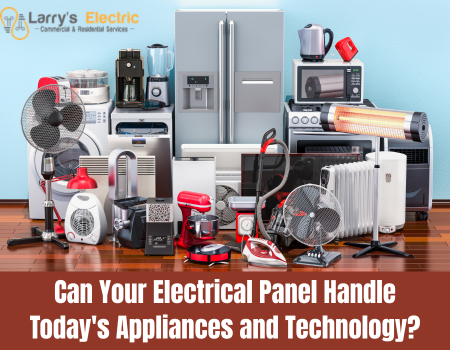
The risk profile for surge damage in a Seattle home has changed significantly over the last decade because the electronics content of household appliances has changed. A refrigerator from 1995 had a motor, a compressor, and a thermostat. A refrigerator from 2020 has a motor, a compressor, a variable speed compressor controller, a touchscreen interface, wifi connectivity, multiple sensors, and a control board that governs all of it. The 1995 refrigerator was largely immune to the kind of surge damage that destroys electronics. The 2020 refrigerator is vulnerable to exactly that damage.
Heat pumps with variable speed drives are among the most surge-vulnerable appliances in a modern Seattle home and among the most expensive to repair when the electronics are damaged. A control board replacement on a heat pump can cost several hundred to over a thousand dollars. The surge protection that would have prevented it costs a fraction of that installed.
EV chargers, smart home controllers, home audio systems, networked appliances, and the general category of devices that contain significant electronics and that stay connected to power continuously accumulate the cumulative surge stress that produces invisible damage. These devices are on. They’re connected. Every surge event that reaches them is doing something to them even when the event is small enough that nothing visible happens.
Why the Damage of a Power Surge Stays Hidden
The reason cumulative surge damage stays hidden is that there’s no event to connect to the failure. The device works, then works less reliably, then fails. The failure gets attributed to age or to the general unreliability of complex electronics. The replacement gets purchased, and the cycle continues with the same exposure producing the same outcome on a similar timeline.
The home that experiences utility switching events during outage recovery, that has an older electrical panel with less consistent voltage regulation, that’s in a neighborhood with aging distribution infrastructure, or that has large motor loads cycling on and off internally is experiencing surge events regularly enough that the cumulative damage is accumulating regularly. Seattle’s grid, with its aging distribution infrastructure in established neighborhoods and its weather-related outage and restoration cycles, creates a surge exposure that’s consistent rather than exceptional.
What Protection From a Power Surge Actually Accomplishes
Whole-home surge protection installed at the electrical panel intercepts surge energy before it reaches the branch circuits and devices in the home. The surge that would have reached the heat pump control board, the refrigerator’s control electronics, and the EV charger simultaneously gets absorbed at the panel rather than distributed through the home’s wiring to each device.
Point-of-use protection at individual outlets adds a second layer that addresses the residual surge energy that panel-level protection reduces but doesn’t entirely eliminate. The combination of panel-level and point-of-use protection addresses the large surge events from external sources and the smaller internal surge events from appliances cycling.
The Consumer Product Safety Commission’s electrical safety resources cover how power surges damage electronic appliances and components, what protection standards apply to surge protection devices, and what consumers should understand about the cumulative damage that repeated small surge events produce in sensitive electronics — authoritative federal consumer safety context that supports the article’s core argument about why surge damage is more common and less visible than most homeowners recognize.