For many Seattle homeowners, a tripped breaker is a minor annoyance; the lights go out in one room, the microwave stops working, or a space heater shuts off unexpectedly. Most people simply reset the breaker and carry on. While this quick fix seems harmless, repeated breaker trips are often a warning sign of underlying electrical problems that should not be ignored. In Seattle homes, moisture load, aging panels, and potential safety risks make these warnings particularly important.
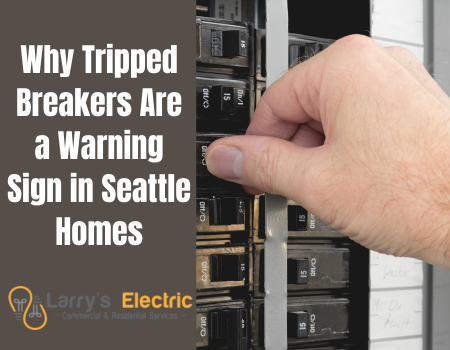
Why Tripped Breakers Are a Warning Sign in Seattle Homes
Understanding the Role of Breakers
Circuit breakers are designed to protect a home’s electrical system, they interrupt power when circuits are overloaded, preventing wires from overheating and reducing the risk of fire. While a single trip can happen due to normal usage, frequent or persistent trips suggest that the system is struggling to handle the load.
In Seattle, where many homes are decades old, aging electrical panels can compound the problem. Breakers that trip repeatedly may indicate that the system is no longer able to keep up with modern electrical demands or that components have deteriorated over time.
Moisture Load Increases Electrical Stress
Seattle’s wet climate adds another layer of complexity. High humidity and frequent rainfall can create moisture load within homes. Even small amounts of water in attics, basements, or wall cavities can increase the risk of electrical issues.
Moisture can lead to corrosion on connections, loosening screws and terminals, which increases resistance in the circuit. This resistance generates heat and can cause breakers to trip more frequently. In extreme cases, moisture intrusion can create short circuits, which pose an immediate fire hazard.
Appliances and electronics also contribute to moisture load indirectly. Humid air can condense on metal parts, and everyday activities like cooking, showering, or using a clothes dryer add to the indoor moisture. Homes with older ventilation systems or insufficient dehumidification are particularly vulnerable to these effects.
Aging Panels Are a Common Issue With Tripped Breakers
Many Seattle homes were built long before modern electrical standards were established. Panels in these homes may have limited capacity, outdated wiring, or breakers that no longer function reliably.
Older panels may struggle to handle the demands of today’s homes, which often include multiple appliances, space heaters, home offices, and entertainment systems. What once worked fine can become a risk factor as energy usage increases over the years.
Signs of aging panels include frequent trips, burning smells, warm outlets, and flickering lights. Homeowners often underestimate the risk, assuming the system is fine because power is restored after resetting a breaker. In reality, these symptoms indicate stress that could lead to component failure or even a fire.
Safety Risks Go Beyond Inconvenience
Tripped breakers are more than just an inconvenience, they are the electrical system’s way of signaling a potential safety hazard, and ignoring frequent trips can result in dangerous consequences.
Overheated wires can damage insulation, increasing the likelihood of shorts. If the root cause is moisture-related, a short circuit could ignite surrounding materials, creating a fire risk. Even minor arcing within a panel can spread unnoticed until it causes serious damage.
Seattle homeowners should also be aware that older wiring types, such as aluminum wiring or knob-and-tube installations, are more prone to overheating and may not handle modern load demands. In these cases, tripped breakers are a critical warning that the system needs attention.
What Homeowners Should Do With a Tripped Breaker
When breakers trip frequently, a simple reset is not enough. The first step is to identify patterns: which breaker trips, when it occurs, and what appliances were running. This information is valuable for electricians assessing the system.
A licensed electrician can inspect panels, wiring, and connections to determine whether the breaker trips are caused by overload, moisture, or a failing component. In some cases, upgrades are necessary, such as replacing old panels, installing additional circuits, or adding modern breakers that can handle current energy demands.
Addressing moisture issues is equally important. Proper ventilation, sealing leaks, and using dehumidifiers can reduce the risk of moisture-related electrical problems. Routine inspection and maintenance prevent small issues from becoming emergencies.
Prevention Protects Homes and Families
Tripped breakers should never be ignored in Seattle homes. While resetting them may restore power temporarily, the underlying issues; moisture load, aging panels, or overloaded circuits, persist. Addressing these problems early protects both the home and the family.
Regular electrical inspections, proper maintenance, and prompt upgrades ensure that breakers serve their purpose safely rather than signaling hidden dangers. In a city known for its rain and older housing stock, taking these warnings seriously can prevent costly repairs and, more importantly, avoid potential hazards.
While a tripped breaker might seem like a minor inconvenience, it is often the first line of defense in home safety.