Lights dimming when an appliance kicks on is one of those things that gets normalized in older homes because it happens consistently enough that people stop noticing it as a problem. It becomes background noise. The refrigerator cycles and the lights flicker, and nobody thinks about it, because it’s been happening for years. That consistency is actually the thing worth paying attention to — it means the electrical system is showing the same symptom repeatedly, and the symptom has a cause that doesn’t go away on its own.
The dimming is the house telling you something about how the electrical system is handling load. What it’s usually saying involves either the panel, the wiring, or both.
What’s Actually Happening When Lights Dim
When an appliance with a motor starts up it draws significantly more current than it does during normal operation. A refrigerator compressor, an air conditioner, or a washing machine; all of these create a startup surge that lasts a fraction of a second but draws several times the running current. That surge puts a sudden demand on the circuit and on the panel feeding it. If the electrical system has enough capacity to absorb that demand without significant voltage drop, the lights stay steady. If it doesn’t, the voltage drops briefly across the system and the lights dim proportionally to that voltage drop.
The dimming that’s brief and slight, and lasting less than a second when a major appliance starts, is normal electrical behavior that reflects the physics of motor startup rather than a system problem. The dimming that’s significant, that lasts several seconds, and that affects lights in multiple rooms rather than just the circuit the appliance is on, or that’s getting worse over time, that’s the electrical system communicating something that needs attention.
Panel Limits
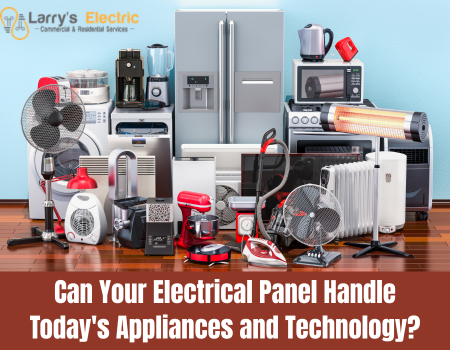
The electrical panel is where load capacity limits show up most directly. An older home with a 100-amp or 60-amp service panel was designed for a world with substantially lower electrical demand than a modern household creates. A heat pump, an electric vehicle charger, and a modern kitchen with multiple high-draw appliances, these loads against an older panel push the available capacity in ways that show up as voltage fluctuation whenever a large load starts up.
The panel itself may be undersized for the home’s current demand. A panel that’s frequently at or near its capacity limit, has less headroom to absorb the startup surge of large appliances without voltage dropping across the system. The lights that dim every time the AC kicks on in a house with a 100-amp panel, are reflecting a capacity situation rather than a wiring fault — the system is working as designed, it’s just designed for less than what’s being asked of it.
Older panels have an additional problem beyond capacity. Federal Pacific and Zinsco panels, common in homes built from the 1950s through the 1970s, have documented reliability issues with their breakers that compound load management problems. These panels sometimes fail to trip under overload conditions, and they handle load fluctuations less predictably than modern panels. Dimming in a home with one of these panels is worth taking more seriously than dimming in a home with a modern breaker panel.
Load Imbalance
A home’s electrical service enters the panel as two 120-volt legs that combine to provide 240-volt service for large appliances. Each circuit in the panel draws from one of these two legs, and a balanced panel has roughly equal load distributed across both. When one leg is carrying significantly more load than the other, the imbalance creates voltage fluctuation on the overloaded leg that shows up as dimming on the circuits fed by that leg.
Load imbalance develops when circuits get added over time without attention to which leg they’re placed on, or when high-draw appliances end up concentrated on one leg rather than distributed across both. An electrician looking at the panel can identify load imbalance quickly, and redistributing circuits between legs is sometimes enough to reduce dimming without a full panel upgrade.
Loose connections anywhere in the system; at the panel, at outlets, and at junction boxes, create resistance that produces voltage drop and heat. A loose neutral connection specifically can cause lights to dim or fluctuate in ways that look like a load or capacity problem, but are actually a connection problem. Loose connections don’t improve with time. They get worse as heat cycles from normal operation expand and contract the connection point repeatedly.
Washington State Department of Labor and Industries outlines the electrical safety standards and licensing requirements that apply to residential electrical work in Seattle, useful context for homeowners trying to understand when dimming and load issues require a licensed electrician rather than a DIY approach.
If the lights in your home are dimming regularly when appliances kick on, the electrical system is worth having assessed before the symptom becomes a more expensive problem. Larry’s Electric serves Seattle and the surrounding area with licensed electrical inspections, panel evaluations, and upgrades sized for what modern homes actually need. Reach out for a quote and find out what the dimming is telling you about your system before it tells you something louder.